Images courtesy of Google Developers
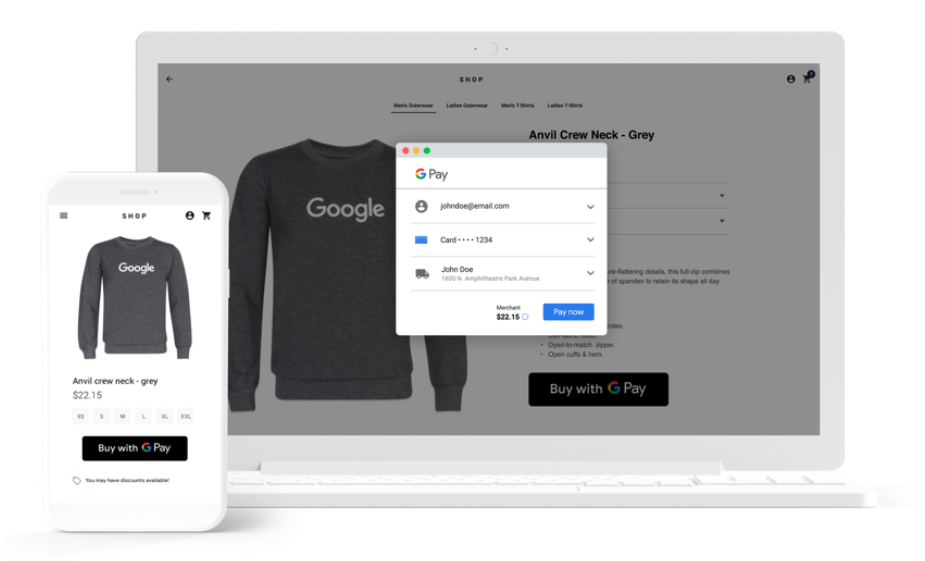
Add Google Pay to your website or Android application with the Finix API, so buyers can pay with any debit or credit card saved to their Google account.
- Streamlined checkout: Set Google Pay as the default, prominent payment method to reduce friction, minimize cart abandonment, and increase conversion.
- Enhanced security: Google Pay's built-in security features help protect buyer data on every transaction.
Before you integrate Google Pay, complete the following Finix and Google requirements.
- Create a Finix API key.
- Complete the seller onboarding process. After approval, the seller has an approved Merchant.
- Review Google Pay's Acceptable Use Policy.
- Serve your website over HTTPS with a valid SSL certificate and TLS support. For the full requirements, see:
- Set up a Google Pay merchant account:
- Review Google Pay's developer documentation to gain production access to the Google Pay API.
- Register with the Google Pay Business Console to set up a merchant account.
- Choose your platform:
- For web integrations, see Google Pay for Payments (Web).
- For Android integrations, see Google Pay for Payments (Android).
The gatewayMerchantId value corresponds to a merchant identity beginning with a prefix IDxxx. There are two options for which value to pass in.
If the Google Pay button is hosted on your domain, use your application Identity ID. This flow is common when a single website hosts all of your checkout flows.
This is the default option for Direct Merchants and most Platforms. You can find the application owner Identity ID from the merchant.identity field on the Merchant you use to process payments.
If you are a Platform that hosts websites on custom URLs, provide the owner Identity of your merchants. For example, a Platform that creates a website for each of its sellers on a custom URL uses this value. Finix recommends reaching out to your Finix point of contact if your flow fits this criterion.